




Natural Phospholipids & Lecithins
Key lipid excipients valued for emulsification, bioavailability and advanced drug delivery across pharmaceutical and nutraceutical systems
Lecithin is a complex natural mixture of phospholipids and other lipid components like triglycerides, glycolipids & fatty acids. They typically contain minimum of 50% polar lipids, which are the active ingredients of lecithin & impart to it properties making them ideal for various healthcare applications.
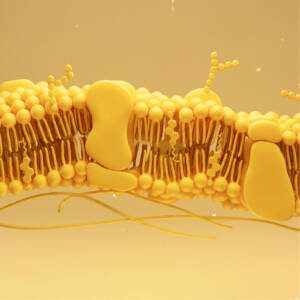
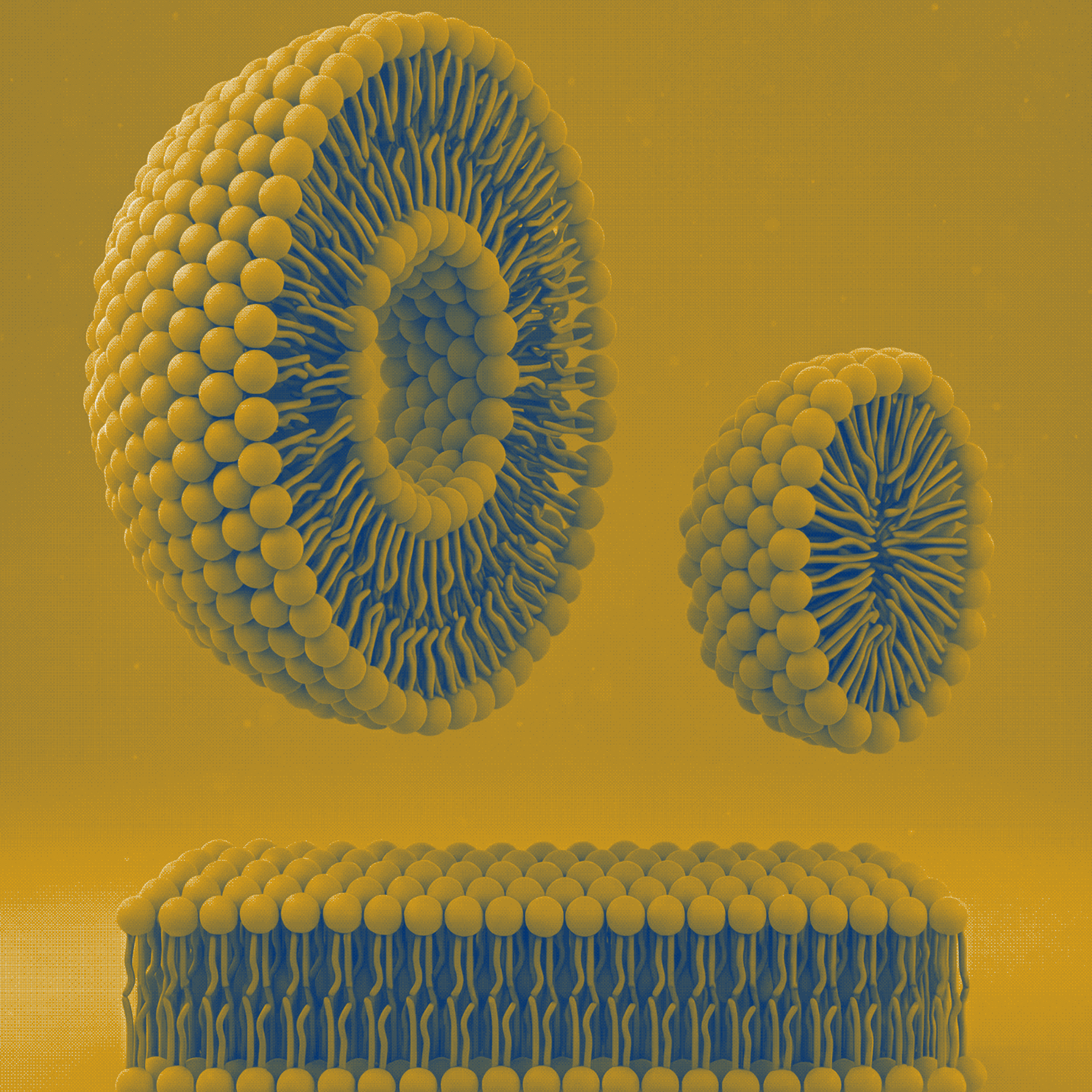
Phospholipids are lipids containing phosphorus, a polar head and nonpolar tails. They are essential lipids of biological membranes. They have an amphiphilic character & a unique property of self assembly. The most prominent phospholipid is Phosphatidylcholine (PC).
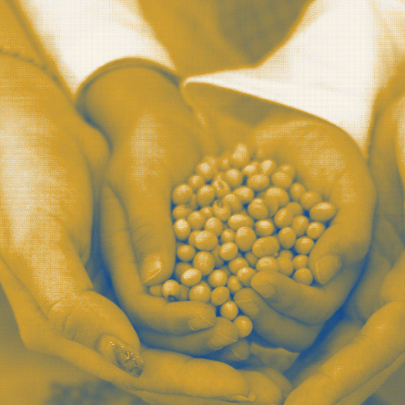
The most common sources of natural Phospholipids & Lecithins are soybean, sunflower, egg & milk (dairy). Phospholipids play functional roles in various health segments. Based on their properties, phospholipids are used as emulsifiers, wetting agents, solubilizers, liposomal & lipid nanoparticle agents.
Understanding Phospholipids
• Cells are surrounded by a bilayer of polar lipids called Phospholipids.
• They are most essential lipids of all biological membranes.
• Classified by US FDA as Generally Regarded as Safe (GRAS), natural (non chemical) origin.
• Diverse applications.
Biochemical Significance
• Play an important role for signal transduction cascades in nerve cells.
• High propensity as drug carriers and excellent biocompatibility.
• Used for therapeutic agents who have poor bioavailability, rapid clearance and toxic effects.
• Phospholipid based drug delivery systems have proved to be more efficient and provide appropriate systemic effect.
• They act as surface-active wetting agents in pleura and alveoli of lung, pericardium, joints etc.
Biochemical Significance
• Play an important role for signal transduction cascades in nerve cells.
• High propensity as drug carriers and excellent biocompatibility.
• Used for therapeutic agents who have poor bioavailability, rapid clearance and toxic effects.
• Phospholipid based drug delivery systems have proved to be more efficient and provide appropriate systemic effect.
• They act as surface-active wetting agents in pleura and alveoli of lung, pericardium, joints etc.
Aid in Formulation Development
• Emerging platform for drug delivery due to their amphiphilic character.
• Facilitate the absorption of drugs
• Improves the bioavailability of drugs
• for drugs with poor solubility and permeability (BCS class III, IV)
• Improves the physical characteristics resulting into more convenient and effective functionalized product for the consumer.
• Reduces toxic effects of drugs
Physiological Properties
• They assemble the circulating lipoproteins, which mainly transport lipophilic triglycerides and cholesterols through blood.
• Together with cholesterols and bile acids form mixed micelles to enhance absorption of fat soluble substances in gallbladder.
Toxic Effects
• Classified by US FDA as Generally Regarded as Safe (GRAS) at all concentrations.
• Natural (non chemical) origin.
• Non Genetically Modified (non-GMO) and non-allergen grades available.
• Phospholipid based drug delivery systems have proved to be more efficient and provide appropriate systemic effect.
Toxic Effects
• Classified by US FDA as Generally Regarded as Safe (GRAS) at all concentrations.
• Natural (non chemical) origin.
• Non Genetically Modified (non-GMO) and non-allergen grades available.
• Phospholipid based drug delivery systems have proved to be more efficient and provide appropriate systemic effect.
Routes of Administration
• Oral
• Pulmonary
• Topical
• Rectal
• Parenteral
Routes of Administration
• Oral
• Pulmonary
• Topical
• Rectal
• Parenteral
